
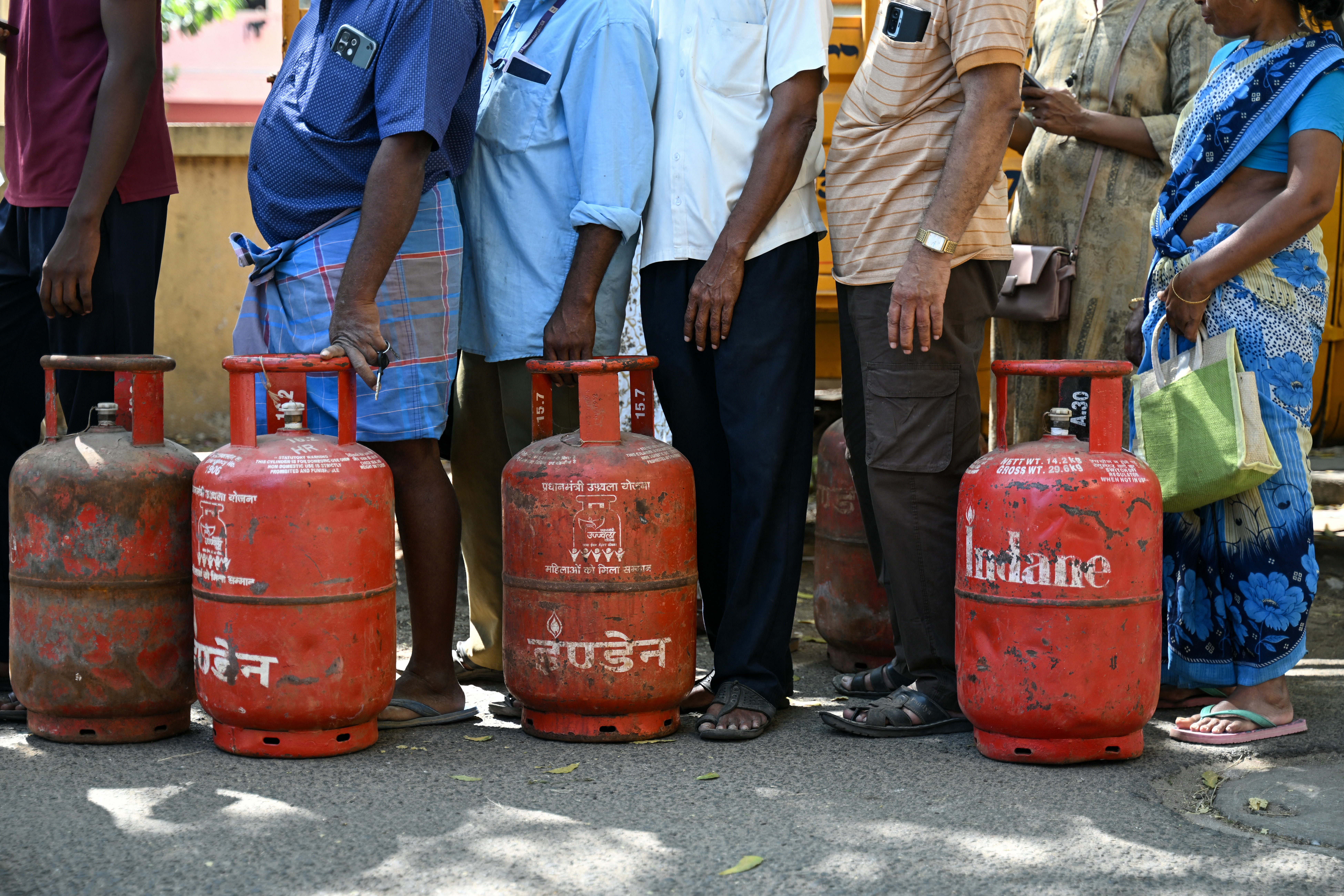
The cost of liquified petroleum gas (LPG) imports – an important source of cooking fuel in parts of Africa – have surged by 90% in East Africa and 70% in West Africa as the closure of the Strait of Hormuz heads for a third month, according to the International Energy Agency.
Marina Petrelli, Africa energy analyst at the IEA, says the price surge in Africa is largely the result of a global supply-demand imbalance, rather than physical constraints on supplies to the continent. While the continent itself sources little LPG from the Gulf, countries that usually source their supply from the region are having to look for the alternative suppliers from which African countries buy. This forces costs up across the board.
“We estimate that only 5% of the LPG imported in sub-Saharan Africa comes from the Middle East,” she says. “On the continental level the impact on supply is limited, although certain countries and regions may be more acutely impacted,” Petrelli says.
Petrelli says the price surge is forcing LPG users in East Africa to spend an additional 5% of their income on cooking compared to before the crisis.
So far, West Africa, which sources much of its LPG supply from domestic producers as well as imports from the United States, has been less exposed than the east of the continent.
Governments respond
Governments around the world have responded in a variety of ways. Tanzania, for example, has removed VAT on imported LPG cylinders and bulk LPG storage facilities. India, which has been harder hit by physical supply shortages, has been forced to restrict supplies to industrial users in order to prioritise households.
Several Africa governments have a longstanding policy of intervening in the LPG market in an effort to keep prices stable. The massive increase in import costs does not necessarily translate into higher consumer costs in all countries, at least in the short-term.
For example, Côte d’Ivoire sets a regulated price for LPG cylinders. A 6kg cylinder has cost CFA2,000 (around $3.55) for several years, amounting to a de facto subsidy of around 50% before the recent price spike. The consumer price has remained unchanged even over the past several weeks, despite the much higher import cost.
Petrelli points out that, in countries that regulate prices with the help of subsidies, the “fiscal burden” of the crisis has effectively switched from consumers to governments. “But this is not something that is necessarily sustainable in the long term,” she warns.
Health and environmental impacts
The IEA estimates that around one billion people in Africa lack access to safe cooking fuels. Household air pollution from the burning of biomass is blamed for 815,000 premature deaths per year, while foraging for firewood drives the annual loss of 1.3m hectares of forest.
Although LPG is a fossil fuel, using LPG for cooking is far safer and less environmentally damaging than the traditional method of cooking with biomass on open hearths. Before the war, LPG was being heavily promoted as a scalable solution to the continent’s chronic clean cooking deficit.
The increase in costs for LPG users threatens to force households to abandon their gas stoves and return to cooking with highly polluting fuels. Petrelli, while acknowledging the difficulty of gathering evidence, says that “emerging markets signals” suggest a return to using firewood or charcoal for some meals, especially in rural areas.